
Role-specific questions
Practice behavioral, situational, technical-context, and motivation questions tied to the job description.
AI interview preparation
Use your resume and the job description to generate role-specific interview questions. Plan STAR answers, practice your responses, and prepare follow-up examples before the interview.
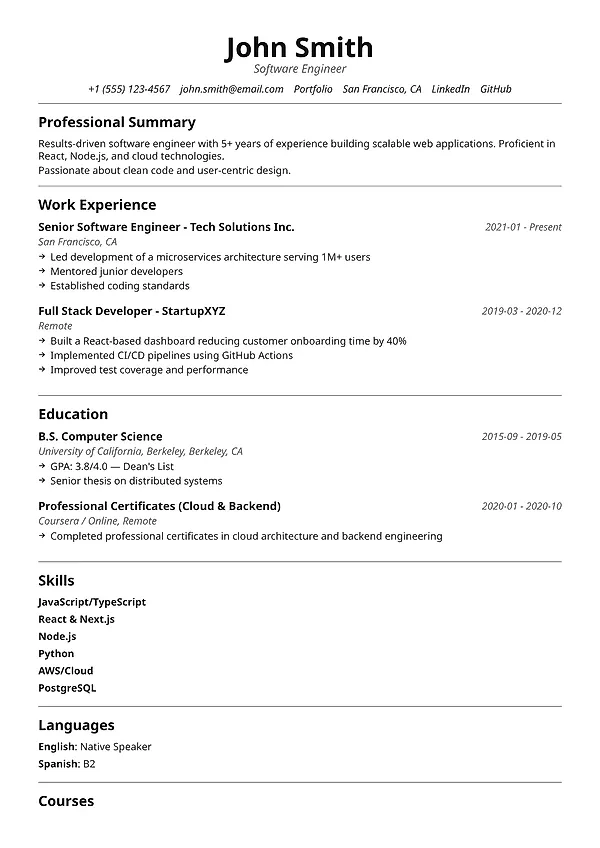
Create or upload. Start with a professional template or import the resume you already have.
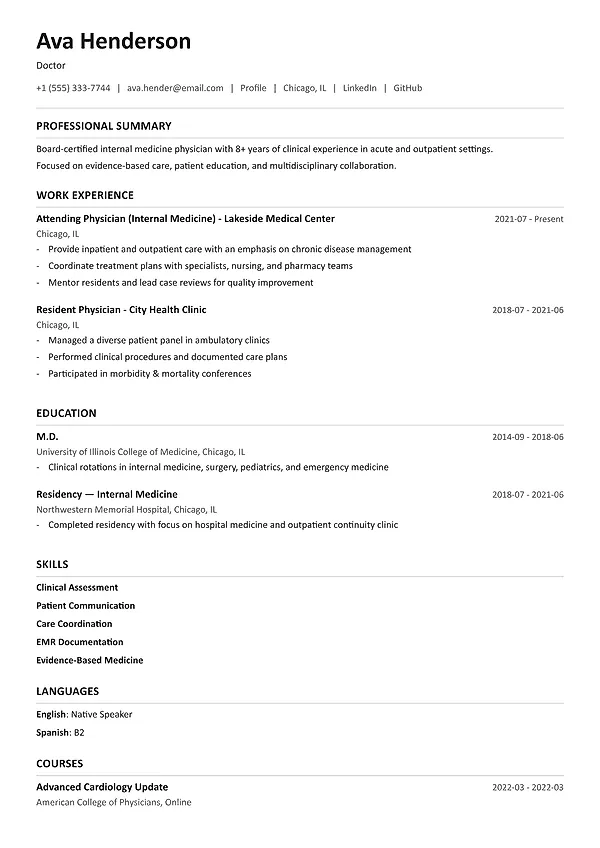
Edit every detail. Use guided sections and AI suggestions while keeping control of the final wording.
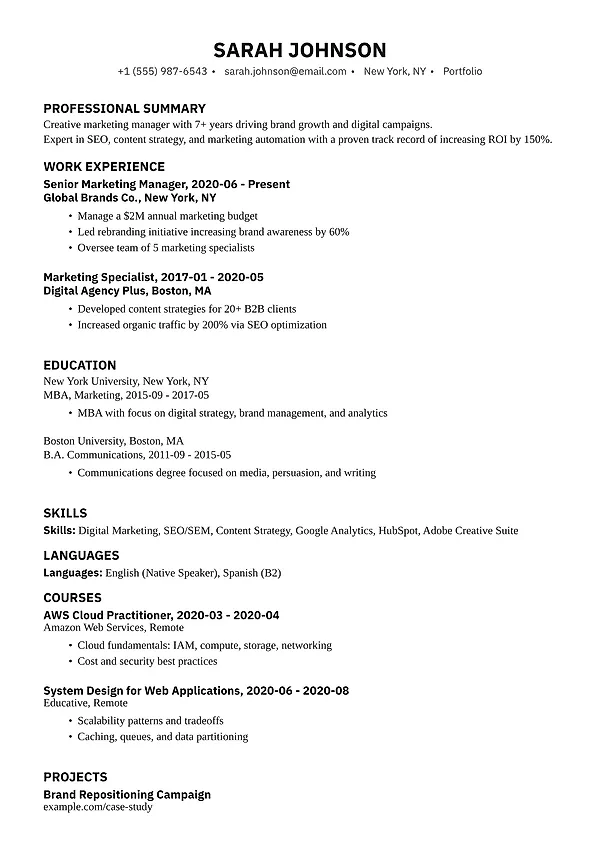
Download a clean PDF. Export a professional resume or cover letter without a watermark.
Prepare before the interview
It is easier to answer clearly when you already know which projects, decisions, results, and lessons you want to discuss. Practice helps you organize those details without memorizing a script.
Understand what the role is likely to test: skills, judgment, collaboration, ownership, and motivation.
Choose examples that show different strengths instead of forcing one project into every answer.
Structure behavioral answers with enough context, specific action, and a clear result.
Practice the opening and key transitions, but do not memorize a script that sounds brittle or rehearsed.
AI interview preparation tools
Prepare for the responsibilities in the job description and the projects, achievements, transitions, and skills an interviewer can see in your resume.
Practice behavioral, situational, technical-context, and motivation questions tied to the job description.
Prepare for the projects, transitions, achievements, and gaps a thoughtful interviewer may ask about.
Shape situation, task, action, and result without burying your contribution in background detail.
Practice speaking the answer so you can find awkward sections, missing context, and language that does not sound like you.
Go beyond the first answer with questions about tradeoffs, conflict, metrics, mistakes, and what you learned.
Cover role knowledge, company research, example variety, questions for the interviewer, and practical setup.
How it works
Use the actual role, select relevant examples from your experience, practice aloud, and improve the parts that feel vague or too long.
Use the actual job description so the practice focuses on the skills and decisions likely to matter.
Pick projects and moments that show impact, collaboration, judgment, learning, challenge, and leadership.
Answer in your own words, keep the background short, and make your personal action unmistakable.
Improve missing context, trim rambling sections, and practice likely follow-up questions.
More career tools
Use your resume in the job matcher, cover letter builder, and interview preparation tools when you are ready for the next step.
Common questions
Learn what the tool does, how to use it, and which decisions still need your review.
Prepare for motivation, role knowledge, resume walkthrough, major achievements, setbacks, conflict, collaboration, prioritization, learning, and questions specific to the job's core responsibilities.
STAR stands for Situation, Task, Action, and Result. It helps you give enough context, clarify your responsibility, explain what you personally did, and show what changed.
Many behavioral answers work well in roughly one to two minutes. Complex examples may need longer, but the interviewer should understand the point early and be able to ask follow-ups.
Memorize the facts and structure, not a word-for-word script. Rehearsed language can sound unnatural and may make follow-up questions harder.
It uses the roles, projects, achievements, skills, and transitions in your resume to generate more relevant questions and help you identify the evidence each answer can draw from.
Start building for free
Add your resume and the target role to prepare relevant questions, STAR answer plans, and follow-up examples.